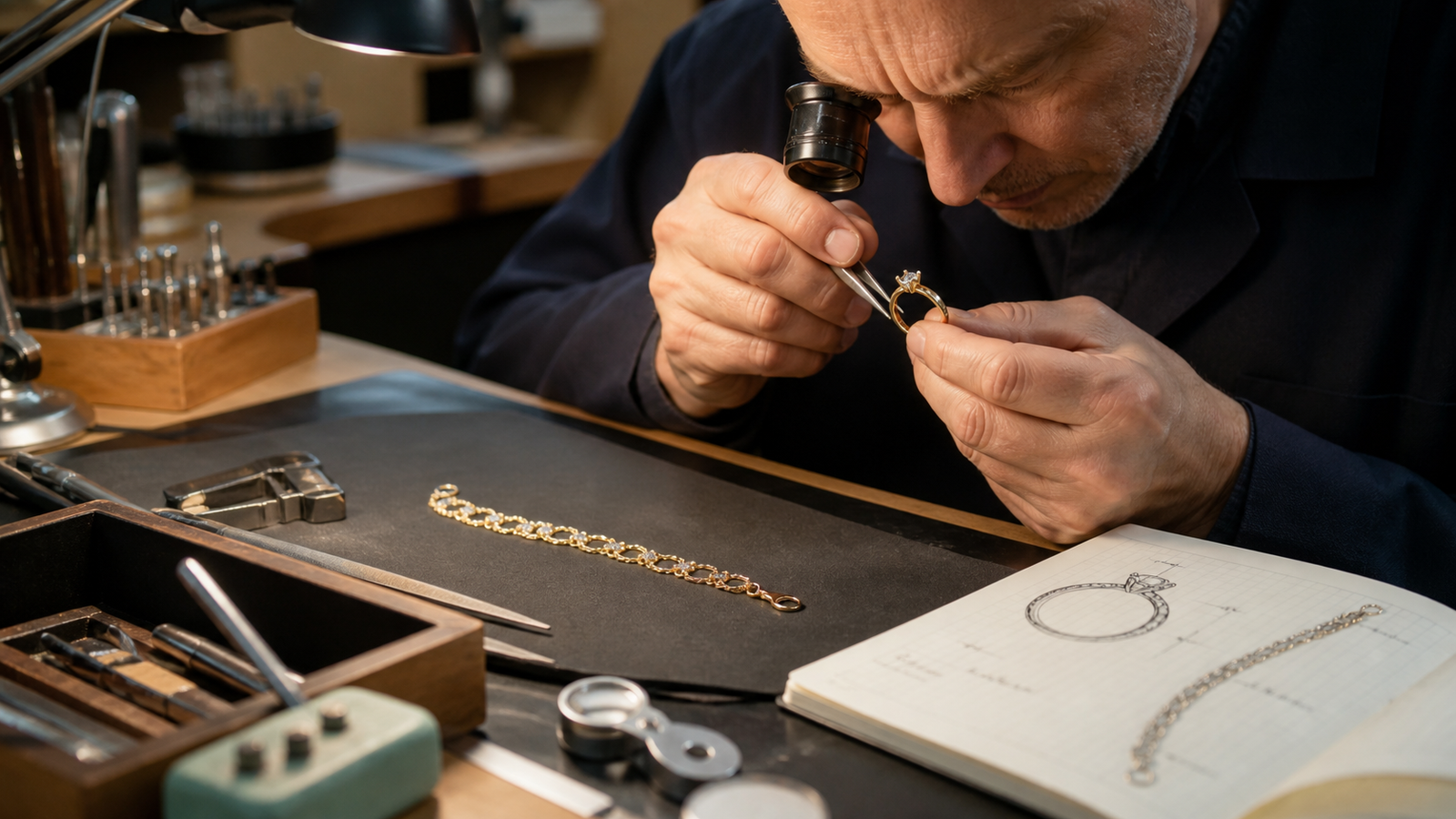
Many jewelry repairs become expensive because a small warning sign is ignored. A loose prong, thinning link or unreliable clasp is easier to assess before the stone falls out or the bracelet disappears.
1. A gemstone moves or clicks
Hold the piece near your ear and move it gently—without pressing on the stone. Any movement, faint clicking or new gap around a setting is a reason to stop wearing the piece. Do not use glue or try to bend a prong back with household tools.
2. A prong catches clothing
A snagging prong may be lifted, worn or no longer protecting the stone. Continued wear can pull it farther away. Place the piece in a separate soft pouch so it cannot catch another chain, and request a setting inspection.
3. A clasp closes differently
Clasps and safety catches should feel consistent. A bracelet that opens with less resistance, a necklace catch that no longer aligns or an earring back that slides too freely can indicate wear. Replacing a small component early is preferable to losing the entire creation.
4. Links, shanks or hinges look thin
Gold and platinum move and wear with daily contact. Compare high-friction areas with an older photograph if available. A ring shank that has become very thin, a stretched chain or a distorted hinge deserves professional evaluation before it fractures.
5. The piece is bent after impact
Distortion can transfer stress into settings and solder joints even when the damage appears cosmetic. Stop wearing a bent ring or bracelet. Avoid straightening it at home, which can crack metal or loosen stones further.
What to ask before authorizing repair
Cartier offers maintenance, adjustment and repair through boutiques, authorized retailers and service channels. Whichever qualified provider you use, request a written diagnosis and estimate. Ask whether stones will be removed, settings rebuilt, parts replaced, hallmarks affected or the piece polished. Photograph the item from several angles and record its weight, identifying marks and current condition before handover.
Your view
Have you ever caught a loose setting or failing clasp before it became a larger repair? Share what you noticed in the comments.
This guide is educational and does not replace inspection by the brand or a qualified jeweler.