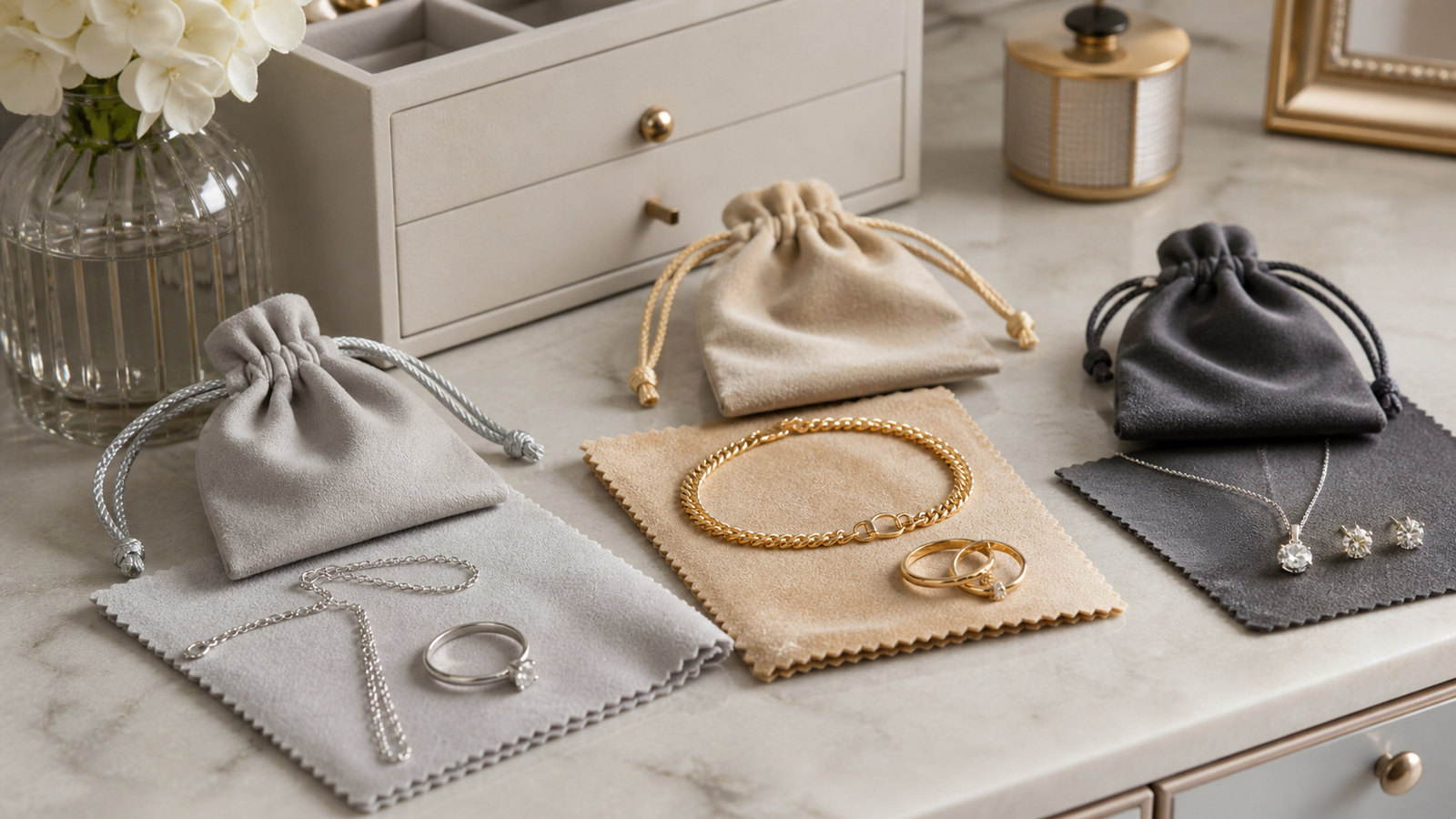
The right jewelry routine is not simply “clean everything until it shines.” Sterling silver, gold, platinum, diamonds, pearls and deliberately oxidized finishes require different decisions—and repeated polishing can remove material.
Separate pieces before they mark each other
Tiffany recommends keeping jewelry in a storage box or tarnish-resistant cloth and separating individual pieces. Chains tangle, diamonds can scratch softer surfaces and unsecured earrings disappear easily. At home or while traveling, one compartment or pouch per piece is a simple way to reduce friction.
Air, salt, sulfur-containing materials and household chemicals can accelerate tarnish or discoloration. Keep jewelry away from bleach, strong cleaners, perfumes, lotions and hair products. Remove it for swimming, bathing, exercise and household work when impact or chemical exposure is likely.
Cleaning is not the same as polishing
Light cleaning removes surface residue. Polishing removes a tiny amount of metal to reduce scratches and restore brightness. Tiffany cautions that gold, platinum and silver should not be polished endlessly; repeated polishing gradually changes the piece. Oxidized silver is especially sensitive because ordinary silver polish can strip the intentionally dark finish.
For diamonds, dirt often gathers beneath the setting and reduces brilliance. A non-abrasive method suitable for the particular stone may help between professional cleanings, but not every gemstone tolerates the same solution or brush. Pearls, opals and other delicate materials deserve separate guidance.
Use inspection as part of cleaning
Before wearing a ring or pendant again, look for a stone that moves, a prong that catches fabric, a clasp that no longer closes positively, stretched links or a chain that has kinked. Stop wearing the piece if a gemstone may be loose. Professional cleaning is also an opportunity to check the setting, not merely improve shine.
Keep service notes and photographs, especially for frequently worn engagement rings or heirloom pieces. Ask whether the proposed work is cleaning, polishing, tightening, rebuilding or replacing—and how it may affect the original finish.
Your view
Which problem brings your jewelry in for service most often: tarnish, scratches, loose settings or damaged clasps? Join the discussion below.
This guide is educational and does not replace inspection by the brand or a qualified jeweler.