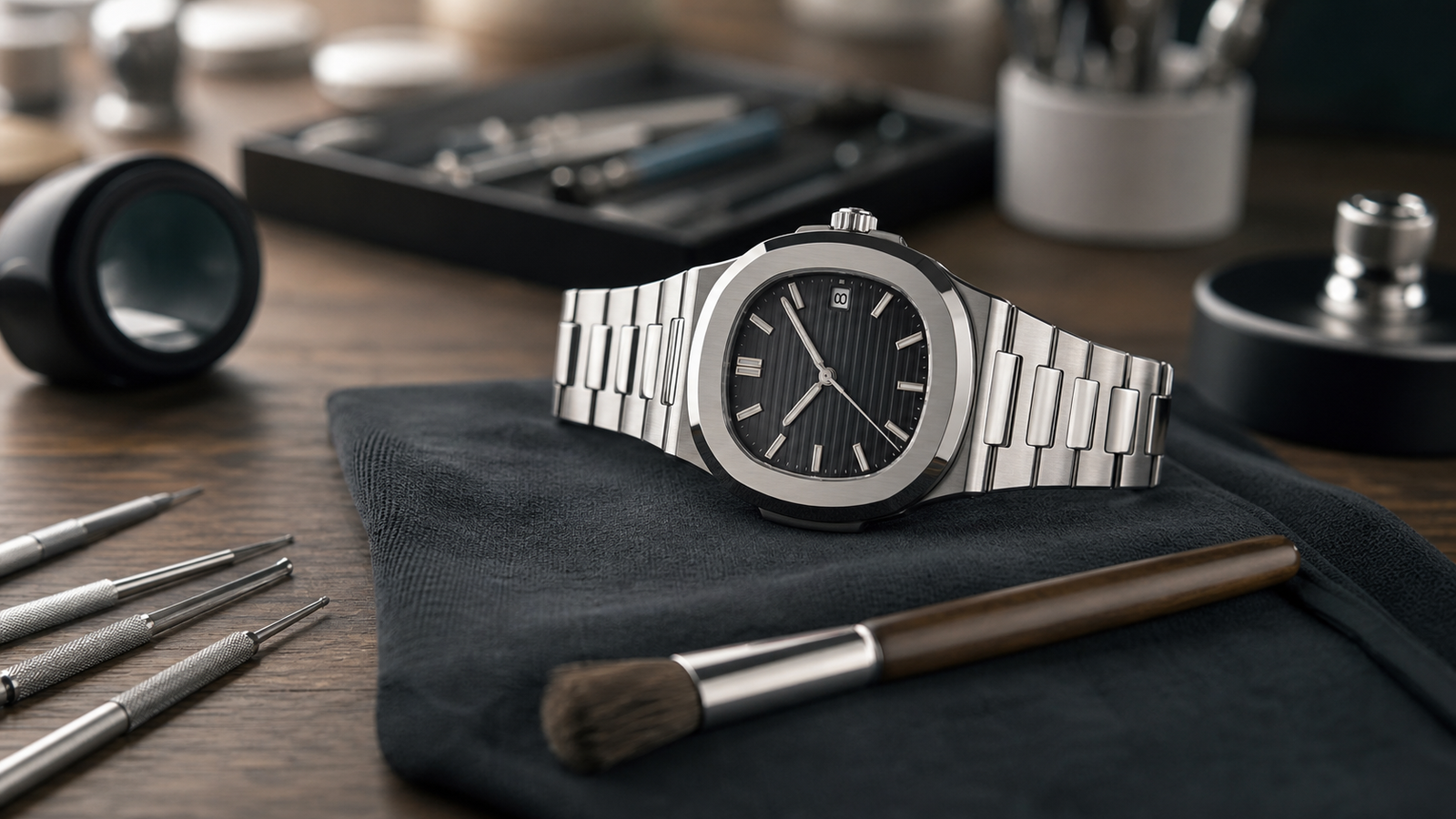
A microfiber cloth can restore a watch’s clean appearance; it cannot confirm water resistance, correct timing drift or replace degraded seals. Knowing that boundary is the central skill in responsible watch ownership.
Safe day-to-day care
Rolex recommends occasional cleaning with a microfiber cloth. For appropriate waterproof models on metal bracelets, the brand also describes washing with soapy water and a soft brush—but only after confirming that the winding crown is fully screwed down. Leather straps should not be treated this way. After exposure to seawater, fresh-water rinsing helps remove salt and sand.
Those directions assume that the watch is in sound condition. If the crystal is cracked, the crown feels damaged, condensation is visible or the service history is unknown, do not immerse it. Water resistance is a tested condition, not a permanent promise inferred from the depth rating printed for a new watch.
Polishing is different from cleaning
Fine scratches are part of normal wear. Removing them requires polishing, which changes metal surfaces and edges. Rolex states that professional polishing of the case and bracelet should be performed by an Official Rolex Service Center. Collectors should decide in advance whether preserving wear and original geometry matters more than restoring a brighter finish.
When submitting a watch, specify whether refinishing is authorized. Ask the service center to document the estimate, replacement parts and requested cosmetic work before approval.
Signals that deserve professional inspection
Timing that changes suddenly, unusually low power reserve, moisture under the crystal, a crown that will not screw down, a loose bracelet component or impact damage all justify prompt assessment. Rolex says service intervals depend on model and real-life use, with an approximate ten-year recommendation for many watches. Diving, shocks and harsh environments may change the practical schedule.
A complete Rolex service includes diagnosis, movement disassembly and cleaning, lubrication, replacement of non-compliant parts, case sealing, precision tests and waterproofness testing. That scope cannot be replicated by surface cleaning at home.
Your view
Would you authorize polishing during a full watch service, or preserve the marks of use? Share your reasoning in the comments.
This guide is educational and does not replace inspection by an authorized service center or qualified watchmaker.